Article Plan: Resistance Band Shoulder Exercises PDF
This comprehensive PDF guide details effective shoulder workouts using resistance bands. It’s perfect for home fitness, offering versatility and cost-effectiveness, mirroring the current trend of at-home training.

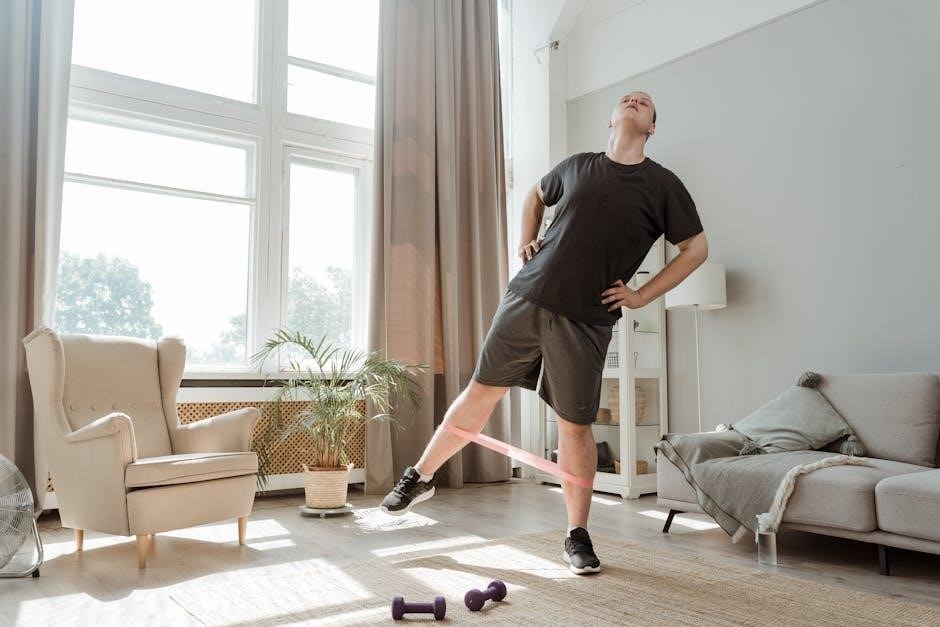
Welcome to a revolutionary approach to shoulder strength and conditioning! This guide focuses on utilizing resistance bands – a remarkably effective and accessible tool for building robust, healthy shoulders. In today’s fitness landscape, where home workouts are increasingly popular, resistance bands offer a compelling alternative to traditional gym equipment.

At Fit&Well, we champion the idea that achieving significant fitness gains doesn’t require expensive machinery or a lengthy commute. A simple set of resistance bands empowers you to sculpt and strengthen your shoulder muscles within the comfort of your own home, be it your living room or backyard. This method aligns perfectly with the “new normal” of prioritizing convenient, at-home exercise routines.
The fitness industry often promotes complex machines that essentially replicate a fundamental principle: providing resistance against muscle contraction. Resistance bands achieve this same principle, but with unparalleled portability and affordability. This PDF will demonstrate how to harness this power, guiding you through a series of targeted exercises designed to enhance shoulder strength, stability, and overall function. Prepare to unlock a new level of shoulder fitness!
Benefits of Using Resistance Bands for Shoulders
Resistance bands offer a unique blend of advantages for shoulder training, making them a standout choice for fitness enthusiasts of all levels. Foremost among these is their remarkable cost-effectiveness. Unlike expensive gym memberships or bulky weight sets, a quality set of resistance bands represents a minimal investment for substantial returns.
Furthermore, their portability is unmatched. Easily packed into a suitcase or gym bag, resistance bands allow you to maintain your shoulder workout routine wherever life takes you – at home, on vacation, or even during business trips. This aligns with the growing desire for flexible fitness solutions.
The versatility and scalability of resistance are also key benefits. Bands come in varying resistance levels, allowing you to progressively challenge your muscles as you grow stronger. This adaptability ensures continuous improvement and prevents plateaus. They effectively mimic weight training, creating resistance against muscle contraction, but in a safer, more controlled manner. Strengthening your shoulders doesn’t necessitate hours at the gym; resistance bands shake up your routine!

Cost-Effectiveness and Portability
One of the most compelling reasons to choose resistance bands for shoulder exercises is their exceptional cost-effectiveness. Compared to the significant expense of gym memberships, free weights, or complex exercise machines, a complete set of resistance bands is remarkably affordable. This makes shoulder strengthening accessible to everyone, regardless of budget constraints.
Adding to their appeal is unparalleled portability. These lightweight and compact bands easily fit into any travel bag, allowing you to maintain your fitness routine wherever you are. This is particularly valuable given the current trend of working out at home, eliminating commute times and gym hassles.

You can build strength and muscle in your living room or backyard with minimal kit. This convenience is a game-changer for busy individuals. The fitness equipment industry generates billions from machines performing simple functions – creating resistance. Bands offer that same resistance, but with freedom and affordability, making them a smart investment for long-term shoulder health and fitness.
Versatility and Scalability of Resistance
Resistance bands offer remarkable versatility in shoulder exercise programming. Unlike fixed-weight dumbbells or machines, bands allow for a full range of motion and can be adapted to countless exercises, targeting all areas of the shoulder complex. This adaptability is key to preventing plateaus and maintaining engagement.

Furthermore, resistance bands provide scalable resistance. By simply changing bands – or adjusting your grip – you can easily increase or decrease the challenge. This makes them suitable for all fitness levels, from beginners to advanced athletes, and allows for progressive overload, crucial for building strength.
This scalability mirrors the core principle of effective fitness: creating resistance against muscle contraction. Bands achieve this simply and effectively. They shake up your workout routine, offering a dynamic alternative to traditional methods. Whether you’re aiming for muscle building or rehabilitation, resistance bands provide a flexible and effective solution for shoulder training, fitting seamlessly into a home workout.

Understanding Resistance Band Levels
Selecting the appropriate resistance band level is crucial for maximizing effectiveness and minimizing injury risk. Bands are typically color-coded to indicate their resistance, ranging from extra-light to extra-heavy. Understanding these levels allows for a tailored workout experience, progressing safely as strength increases.
Beginners often start with lighter resistance to master proper form and build a foundation. As you become more comfortable, you can gradually increase the resistance to continue challenging your muscles. This progressive overload is fundamental to strength gains.
Choosing the right band isn’t just about strength; it’s about the specific exercise and your goals. A great workout can be done with minimal kit, and bands are a prime example. They offer a cost-effective way to build strength and muscle, mirroring the trend of home fitness. Remember, the fitness equipment industry thrives on selling complex machines that essentially replicate simple resistance principles.
Light Resistance Bands – For Warm-up & Rehab
Light resistance bands are ideal for initiating shoulder workouts, focusing on warming up the muscles and enhancing joint mobility. Their gentle resistance facilitates controlled movements, preparing the shoulder complex for more strenuous activity. This is particularly beneficial before heavier resistance training or high-impact exercises.
Beyond warm-ups, light bands play a vital role in rehabilitation programs. They allow individuals recovering from shoulder injuries to regain strength and range of motion without placing excessive stress on healing tissues. Exercises like band pull-aparts and dislocates, performed with light resistance, promote external rotation and shoulder flexibility.
The versatility of resistance bands shines here; they offer a cost-effective alternative to expensive gym equipment. Working out at home, a growing trend, becomes accessible with just a set of bands. Remember, the core principle of fitness is creating resistance, and light bands deliver that safely and effectively for foundational movements.
Medium & Heavy Resistance Bands – For Strength Training
Once a sufficient warm-up is completed, medium and heavy resistance bands become crucial for building shoulder strength and muscle hypertrophy. These bands provide the necessary tension to challenge the deltoids and rotator cuff muscles, promoting significant gains in power and endurance;
Exercises like lateral raises and front raises, performed with heavier bands, directly target the medial and anterior deltoids, respectively. The increasing resistance forces the muscles to work harder, leading to muscle fiber breakdown and subsequent growth. This aligns with the principle that fitness equipment primarily creates resistance against muscle contraction.
The convenience of resistance bands is paramount; a full shoulder workout can be achieved at home, eliminating the need for gym commutes or expensive machines. This is especially relevant given the current trend of prioritizing home fitness. Remember to maintain proper form to prevent injury and maximize effectiveness, building strength in your living room or backyard.
Essential Shoulder Anatomy for Exercise
Understanding shoulder anatomy is fundamental for safe and effective resistance band training. The shoulder joint is complex, relying on multiple muscle groups working in synergy. This section will outline the key players – the deltoids and the rotator cuff – and their respective roles in shoulder movement and stability.
The deltoid muscle, comprised of anterior, lateral, and posterior heads, is responsible for shoulder flexion, abduction, and extension. Targeting each head with specific exercises, like front and lateral raises, ensures balanced development. Equally important is the rotator cuff, a group of four muscles (supraspinatus, infraspinatus, teres minor, and subscapularis).
These muscles stabilize the shoulder joint, preventing injury and enabling smooth, controlled movements. Strengthening the rotator cuff is vital, especially when utilizing resistance, as it provides a crucial foundation for all shoulder exercises. A solid understanding of this anatomy will enhance your workout and minimize risk, allowing you to build strength effectively at home.
Deltoids (Anterior, Lateral, Posterior) – Function & Importance
The deltoid muscle is the primary mover of the shoulder, boasting three distinct heads – anterior, lateral, and posterior – each contributing uniquely to shoulder function. Understanding these distinctions is key to crafting a well-rounded resistance band workout.

The anterior deltoid facilitates shoulder flexion (raising the arm forward) and internal rotation. Exercises like front raises directly target this head, building strength for pushing movements. The lateral deltoid is responsible for shoulder abduction – lifting the arm away from the body – and is effectively worked with lateral raises, contributing to shoulder width.
Finally, the posterior deltoid handles shoulder extension (moving the arm backward) and external rotation; Often neglected, strengthening this head is crucial for shoulder stability and posture. Resistance band pull-aparts are excellent for targeting the posterior deltoid. Balanced development across all three heads is essential for aesthetic appeal and preventing imbalances, ensuring a functional and healthy shoulder.
Rotator Cuff Muscles – Stabilization & Injury Prevention
The rotator cuff isn’t a single muscle, but a group of four muscles – supraspinatus, infraspinatus, teres minor, and subscapularis – working synergistically to stabilize the shoulder joint. Their primary role isn’t powerful movement, but rather controlling and smoothing out shoulder motions, preventing dislocations and injuries.
Supraspinatus initiates shoulder abduction, while infraspinatus and teres minor handle external rotation. The subscapularis contributes to internal rotation. Strengthening these muscles with resistance bands is paramount for shoulder health, especially given the increasing trend of home workouts where proper form can be compromised.
Weakness or imbalance in the rotator cuff can lead to impingement, tendinitis, and even tears. Resistance band exercises like external rotations and band pull-aparts specifically target these muscles, improving stability and reducing injury risk. Prioritizing rotator cuff health alongside deltoid training ensures a robust and resilient shoulder, allowing for continued progress and pain-free movement.
Warm-up Exercises with Resistance Bands
Before diving into heavier resistance band shoulder exercises, a dynamic warm-up is crucial to prepare the muscles and joints, minimizing injury risk and maximizing workout effectiveness. This isn’t about fatigue; it’s about increasing blood flow, improving range of motion, and activating the necessary muscle groups.
Band Pull-Aparts are excellent for activating the rear deltoids and rotator cuff, promoting external rotation and improving posture – often neglected in typical workouts. Band Dislocates, performed with a light resistance band, enhance shoulder mobility and flexibility, gently opening up the joint capsule. These movements prepare the shoulder for a wider range of motion during subsequent exercises.
Focus on controlled movements and proper form during the warm-up. Aim for 10-15 repetitions of each exercise. Remember, a well-executed warm-up is an investment in your workout, setting the stage for optimal performance and reducing the likelihood of strains or tears, especially important when working out at home.
Band Pull-Aparts – For External Rotation & Upper Back
Band Pull-Aparts are a foundational exercise for shoulder health and upper back strength, utilizing a resistance band to target often-underworked muscles. This exercise primarily focuses on external rotation of the shoulders, crucial for maintaining proper shoulder mechanics and preventing imbalances.
To perform Band Pull-Aparts: Hold a resistance band with arms extended in front of you, palms facing each other. Keeping your arms straight (a slight bend is acceptable), pull the band apart, squeezing your shoulder blades together. Focus on initiating the movement with your rear deltoids and upper back muscles, not just your arms. Slowly return to the starting position.
This exercise is incredibly versatile, suitable for all resistance band levels. It’s excellent for correcting rounded shoulders and improving posture. Aim for 3-4 sets of 15-20 repetitions. Prioritize controlled movements and a full range of motion to maximize benefits and minimize risk of injury. It’s a simple yet powerful addition to any shoulder workout routine.
Band Dislocates – Shoulder Mobility & Flexibility
Band Dislocates are a dynamic stretching exercise designed to dramatically improve shoulder mobility, flexibility, and range of motion. Despite the name, it’s not about dislocating the shoulder; it’s about safely moving the arms through a full range of motion while maintaining control and proper form.
To perform Band Dislocates: Hold a resistance band with a wider-than-shoulder-width grip. Keeping your arms straight (a slight bend is okay), slowly raise the band overhead and then down behind your back, essentially “dislocating” the band around your body. Reverse the motion to return to the starting position.
Start with a light resistance band and gradually increase the resistance as your mobility improves. Focus on maintaining a controlled movement throughout the exercise. This exercise is excellent for warming up the shoulder joint before more strenuous exercises. Aim for 2-3 sets of 10-15 repetitions. Remember to listen to your body and stop if you feel any pain. It’s a fantastic way to enhance shoulder health and prevent injuries.
Primary Resistance Band Shoulder Exercises
This section details core resistance band exercises specifically targeting the shoulder muscles. These exercises build upon the foundation of warming up and are designed to increase strength and muscle endurance. Remember, proper form is crucial to maximize effectiveness and prevent injury. We’ll focus on movements that isolate different parts of the deltoid muscle group, ensuring a well-rounded shoulder workout;
Resistance bands offer a progressive resistance curve, meaning the resistance increases as the band is stretched. This challenges the muscles throughout the entire range of motion. These exercises can be easily incorporated into a home workout routine, aligning with the growing trend of at-home fitness.
We’ll cover Lateral Raises (targeting the medial deltoid) and Front Raises (targeting the anterior deltoid and shoulder flexion); Each exercise will include detailed instructions, rep/set recommendations, and modifications for different fitness levels. Utilizing resistance bands allows you to build strength without the need for expensive gym equipment, making it accessible to everyone.
Lateral Raises – Targeting the Medial Deltoid
Lateral raises are a fundamental exercise for developing well-rounded, sculpted shoulders, specifically targeting the medial deltoid. This muscle is responsible for shoulder width and contributes to that coveted V-taper physique. Using resistance bands provides a constant tension throughout the movement, enhancing muscle activation.
To perform the exercise: Stand on the band with feet shoulder-width apart, holding the handles with palms facing your body. Keeping a slight bend in your elbows, raise your arms out to the sides until they reach shoulder height. Focus on leading with your elbows, not your hands. Slowly lower the band back to the starting position.
Begin with 3 sets of 12-15 repetitions. Choose a band resistance that challenges you while maintaining proper form. As you get stronger, progress to a heavier band. This exercise aligns with the principle of building strength and muscle at home with minimal equipment, a key benefit of resistance band training. Remember, consistency is key to seeing results!
Front Raises – Targeting the Anterior Deltoid & Shoulder Flexion
Front raises are crucial for developing the anterior (front) deltoid, contributing to overall shoulder strength and definition. This exercise also significantly improves shoulder flexion – the ability to raise your arm forward. Resistance bands offer a safe and effective way to perform front raises, providing consistent tension throughout the range of motion.
Execution: Stand on the resistance band, feet shoulder-width apart, holding the handle with one hand, palm facing your body. Keeping your arm relatively straight (a slight bend in the elbow is okay), slowly raise your arm forward until it reaches shoulder height. Maintain a controlled movement, avoiding swinging or using momentum. Lower the band back to the starting position with the same control.
Aim for 3 sets of 12-15 repetitions per arm. Select a band that provides adequate resistance without compromising form. This exercise embodies the idea of achieving a great workout at home with minimal kit, as highlighted by Fitamp;Well. Prioritize proper technique to maximize effectiveness and prevent injury.